
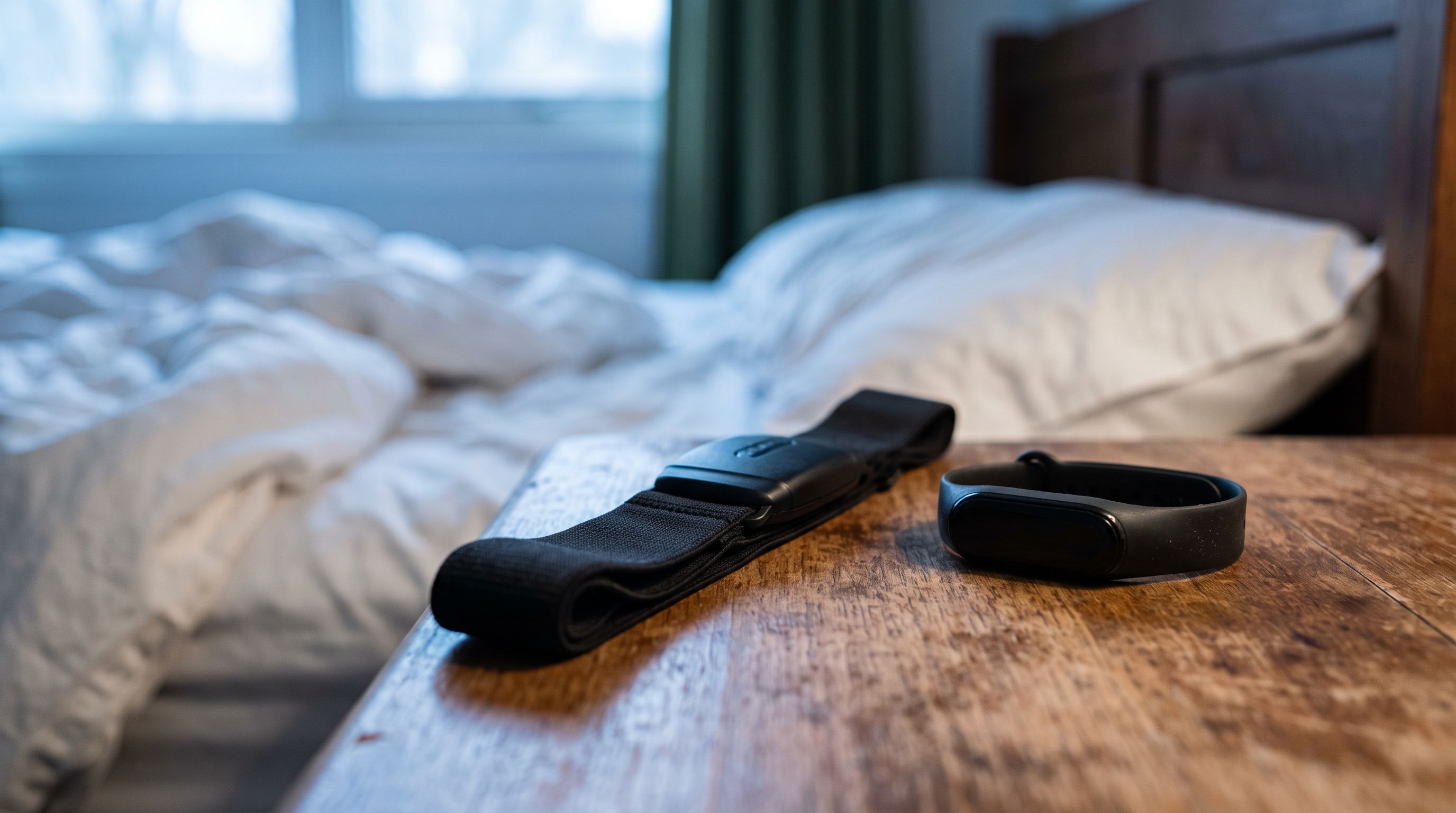
Deep Dive: HRV-Baselines und was Abweichungen bedeuten
Rolling Averages, Messbedingungen und die Grenzen optischer Sensorik.
Für eine belastbare Baseline braucht es mindestens 14, besser 30 Nächte unter vergleichbaren Bedingungen. Erst dann lässt sich eine natürliche Streubreite bestimmen, gegen die einzelne Nächte bewertet werden können.
Weiterlesen mit Plus
Der Rest dieses Beitrags gehört zum Plus-Paket für 9,90 € im Monat. Darin enthalten sind 76 weitere Beiträge, alle Programme und Webinare zum Mitgliederpreis.
Jederzeit kündbar. Die Kernaussagen unten bleiben frei lesbar.
Kernaussagen — auch ohne Abo
- Mindestens 14, besser 30 Nächte für eine belastbare Baseline.
- Zwei bis drei Nächte unter der eigenen Streubreite = echtes Signal.
- Nachtmessungen sind stabiler als morgendliche Spotmessungen.
 Vertiefen Ist eine HRV von 45 ms normal – oder gibt es gar keinen festen Normalwert?
  Nächster Schritt Wie berechne ich Wochenmittel und Variationskoeffizient meiner HRV?
  Querverbindung Welche Faktoren senken meine Herzfrequenzvariabilität am stärksten?
 Ähnliche Beiträge




Belege (5)
Open-Access-Publikationen mit offener Lizenz, direkt verlinkt.
Heart rate variability: a multidimensional perspective from physiological marker to brain-heart axis disorders prediction
Abstract
Heart rate variability (HRV), a non-invasive measure of autonomic nervous system (ANS) activity and homeodynamics, has received much attention in recent years in the study of cardiovascular disease, mental health, and aging. Changes in HRV not only reflect an individual's ability to adapt to changes in the internal and external environment but also correlate with a wide range of pathological states, making it a powerful tool for predicting disease risk and assessing the efficacy of treatment. The aim of this review is to comprehensively analyze the role of HRV in different physiological and pathological contexts and explore its value as a potential biomarker. Initially, we review the basic concepts, measurements, and influencing factors of HRV, followed by an in-depth discussion of the relationship between HRV and cardiovascular disease, epilepsy, depression, aging, and inflammation. Special emphasis is placed on the role of HRV in assessing the health impact of obesity, nutrition, and lifestyle. Additionally, we explore the use of HRV in clinical practice, including its potential in predicting disease, guiding treatment, and evaluating the effects of interventions. Ultimately, we suggest future research directions, including the promise of HRV in individualized medicine and health monitoring. While HRV holds promise as a non-invasive, trans-diagnostic biomarker, current evidence remains preliminary and largely associative. Its clinical utility for personalized medicine or ro
Heart rate variability in cardiovascular disease diagnosis, prognosis and management
Abstract
Heart rate variability (HRV), the variation in intervals between consecutive heartbeats, reflects autonomic nervous system function and has been studied as a potential biomarker in cardiovascular disease (CVD). While reduced HRV has been linked to arrhythmias, heart failure, and ischaemic heart disease, findings across studies are mixed and its prognostic value remains debated. This review evaluates HRV's diagnostic, prognostic, and therapeutic roles in CVD. HRV can reveal autonomic dysfunction early, predict outcomes such as sudden cardiac death and recurrent myocardial infarction, and track recovery after cardiac events. It also shows promise in monitoring comorbid conditions like heart failure and depression that exacerbate cardiovascular risk. Advancements in wearable technology and machine learning are expanding HRV's potential. Wearable devices enable continuous, non-invasive HRV monitoring, while machine learning algorithms enhance the precision and predictive power of HRV analysis. These innovations may facilitate real-time data collection and tailored treatment plans, though their clinical utility requires validation in larger, prospective trials. Key challenges remain, including measurement variability, lack of standardisation, and limited incremental prognostic value over established risk factors. This review highlights HRV's emerging role in personalised cardiovascular care while acknowledging the substantial research needed before widespread clinical adoption.
Monitoring Training Adaptation and Recovery Status in Athletes Using Heart Rate Variability via Mobile Devices: A Narrative Review
Abstract
Heart rate variability (HRV) is a non-invasive biomarker that reflects autonomic nervous system dynamics, providing valuable insights into physiological adaptation, stress, and recovery in athletes. Among the various HRV metrics, the root mean square of successive differences (RMSSD) has emerged as a robust and practical measure due to its strong association with parasympathetic activity, ease of calculation, and reliability in both short- and ultra-short-term recordings. This review examines the methodological considerations for using HRV to monitor training adaptations and recovery status in athletic populations. We highlight the superiority of routine, near-daily HRV measurements over isolated assessments, emphasizing the utility of weekly averages and the coefficient of variation (CV) to capture both chronic adaptations and acute homeostatic perturbations. Additionally, we discuss the selection of HRV devices, data recording procedures, and strategies to enhance athlete compliance. While RMSSD offers significant advantages for field-based monitoring, we also address its limitations, including its sole focus on parasympathetic activity and susceptibility to external confounders. Future directions include the integration of HRV data with other physiological markers and machine learning algorithms to optimize individualized training and recovery strategies. This review provides sport scientists and practitioners with evidence-based recommendations to enhance the application
Heart Rate Variability and Autonomic Dysfunction After Stroke: Prognostic Markers for Recovery
Abstract
Stroke is a major cause of long-term disability and mortality worldwide, often resulting in impairments not only in motor and cognitive functions but also in autonomic nervous system (ANS) regulation. Among the physiological markers that reflect ANS activity, heart rate variability (HRV) has emerged as a promising biomarker for assessing stroke severity and predicting recovery outcomes. HRV quantifies the temporal fluctuations between heartbeats and is traditionally analyzed through time- and frequency-domain measures. More recent approaches have introduced non-linear metrics such as approximate entropy, sample entropy, and detrended fluctuation analysis to capture complex heart rate dynamics. In this narrative review, we address the role of both linear and non-linear HRV parameters in the context of stroke, highlighting their relevance for understanding autonomic dysfunction and guiding rehabilitation. Evidence shows that reduced HRV is associated with poorer functional outcomes, higher mortality, and increased risk of complications post-stroke. Moreover, HRV trends can provide valuable insights into treatment effectiveness and individual recovery trajectories. We also discuss practical considerations for HRV measurement, including device selection, preprocessing strategies, and the need for methodological standardization. Finally, we outline interventional strategies that may enhance HRV and promote better recovery. Together, these findings support the integration of HRV an
Effect of nighttime bedroom temperature on heart rate variability in older adults: an observational study
Abstract
<h4>Background</h4>Climate change is increasing the frequency of hot nights, which may contribute to cardiovascular morbidity and mortality by impairing sleep and autonomic recovery. Despite World Health Organization guidelines for maximum daytime indoor temperatures (26 °C, 79 °F), there are no equivalent recommendations for nighttime conditions. We investigated the impact of nocturnal bedroom temperature on heart rate and heart rate variability (HRV) in free-living older adults.<h4>Methods</h4>In this observational study, 47 community-dwelling adults aged ≥ 65 years in southeast Queensland, Australia, were monitored across one summer (December 2024-March 2025). Wearable devices recorded heart rate and HRV during nighttime periods of sleep between the hours of 9 PM-7 AM, while in-home sensors continuously measured bedroom temperature. The primary outcome was the natural logarithm of the root mean square of successive differences (lnRMSSD). Secondary outcomes were log-transformed frequency-domain HRV indices (high frequency: lnHF, low frequency: lnLF, low to high frequency ratio: lnLF:HF) and heart rate. Generalised mixed effects models analysed associations between wearable derived outcomes and temperature categories (< 24 °C [79 °F], 24-26 °C [75-79 °F], 26-28 °C [79-82 °F], 28-32 °C [82-90 °F]). Clinically relevant thresholds were defined as ≥ 1.5 standard deviation change in HRV or ≥ 5 beats·min⁻<sup>1</sup> change in heart rate.<h4>Results</h4>Across 14,179 valid nightti
Quellen aus Europe PMC, ausschließlich CC0, CC BY oder CC BY-SA. Der redaktionelle Text ist eine eigene Formulierung, keine Übernahme aus den Originalarbeiten.
Medizinische Prüfung: Dr. med. Anna Reuter, Fachärztin für Innere Medizin, 30. Mai 2026.
Fehler gefunden oder eine Frage zum Beitrag? Wir prüfen jeden Hinweis gegen die Quellen.
Hinweis an den Leserservice