

Deep Dive: Schlafarchitektur, HRV und biologisches Altern
Tiefschlafanteil, nächtliche HRV und Aufwachfrequenz – die drei Marker, die mehr sagen als die Gesamtdauer.
Die Gesamtschlafdauer ist eine grobe Kennzahl. Wer Wearable-Daten hat, sollte auf drei Ebenen schauen: Tiefschlafanteil, nächtliche Herzratenvariabilität und die Anzahl der Wachphasen. Diese drei Marker korrelieren in Untersuchungen deutlich stärker mit Regenerationsfähigkeit als die Dauer allein.
Weiterlesen mit Premium
Der Rest dieses Beitrags gehört zum Premium-Paket für 29,00 € im Monat. Darin enthalten sind 76 weitere Beiträge, alle Programme und Webinare zum Mitgliederpreis.
Jederzeit kündbar. Die Kernaussagen unten bleiben frei lesbar.
Kernaussagen — auch ohne Abo
- Tiefschlaf unter 10 Prozent plus niedrige nächtliche HRV ist das relevanteste Warnmuster.
- HRV reagiert innerhalb einer Nacht – ideal als Feedbacksignal für Verhaltensänderungen.
- Interventionsreihenfolge nach Effektstärke: Regelmäßigkeit, dann Alkohol, dann Umgebung.
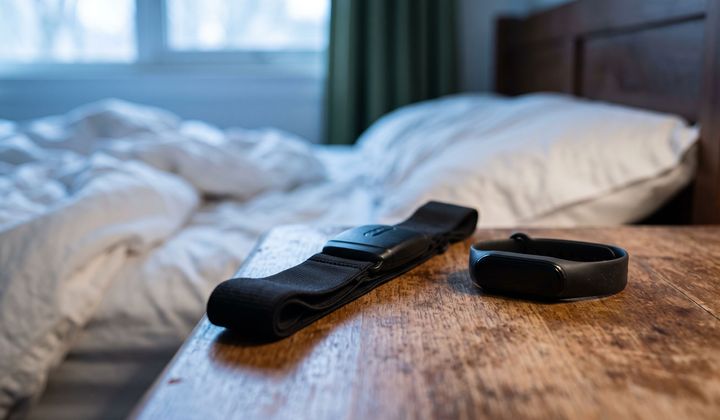 Vertiefen Ab wann ist eine HRV-Abweichung wirklich auffällig, und wie viele Tage brauche ich für meine Baseline?
 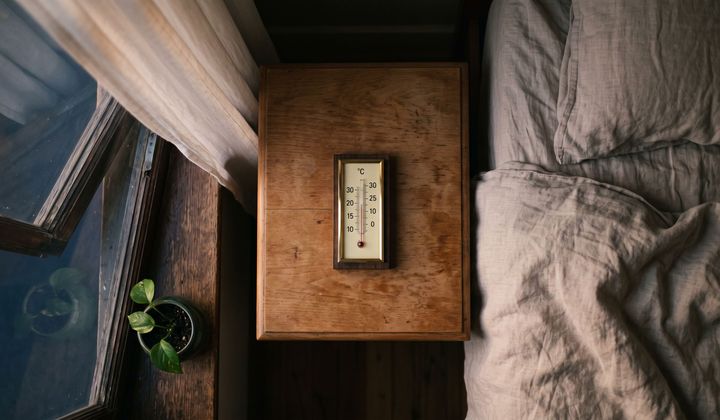 Nächster Schritt Wie warm darf es im Schlafzimmer sein, ohne dass meine HRV leidet?
  Querverbindung Wie zuverlässig messen epigenetische Uhren mein biologisches Alter?
 Ähnliche Beiträge

Belege (5)
Open-Access-Publikationen mit offener Lizenz, direkt verlinkt.
Physical exercise programmes to improve insomnia or poor sleep quality in non-hospitalised elderly people: a systematic review and meta-analysis
Abstract
<h4>Background</h4>Insomnia, or poor quality of sleep, among older people increasingly affects both physical and psychological health. This study aimed to evaluate the efficacy of physical exercise programs for improving sleep quality in non-hospitalized older adults, <i>via</i> objective methods such as actigraphy and polysomnography.<h4>Methods</h4>A systematic review and meta-analysis was conducted between January 1, 2025 and March 31, 2025 according to the standards of the Preferred Reporting Items for Systematic Reviews and Meta-Analyses (PRISMA) guide. It has been registered in Prospero with the number CRD420251009838. The following databases were consulted: PubMed, Web of Science, CINAHL Complete and Scopus. The studies included groups of participants with a mean age above 60 years, who presented with sleep problems, insomnia or an interest in improving sleep quality. To assess the quality of the studies, the Rob-2 tool for randomized studies and crossover studies and the critical appraisal of the Joanna Briggs Institute were used.<h4>Results</h4>Seven experimental or quasi-experimental studies with intervention groups and/or controls published in the last decade were analyzed. Interventions included aerobic exercise, resistance training, tai chi, and aquatic activities. The results demonstrated improvements in sleep latency, sleep efficiency, total sleep time, and wake time after sleep onset. Meta-analyses confirmed statistically significant benefits, particularly in
HK-ASAP study: protocol for a prospective cohort study on sleep quality, brain reserve and cognitive phenotypes in community-dwelling older adults
Abstract
BACKGROUND: The changes of circadian rhythm are very common in older adults, which can lead to decreased quality of life and jeopardize the brain health in the long run. Among all the types of sleep disturbances, poor sleep quality, as a modifiable condition, can greatly affect the daily activities, cognitive functions, quality of life, and even be implicated as a key potential contributing factor in the development of accelerated cognitive decline and prodromal dementia. Consequently, research efforts to understand, and thus potentially model, the effects of sleep quality on cognition and brain during ageing are of great pragmatic values. METHODS: The Hong Kong Cohort of Abnormal Sleep in Ageing Population (HK-ASAP) project is a prospective cohort study recruiting 244 older adults with sleep disturbances. The HK-ASAP study plans to measure sleep quality, brain reserve and cognition at baseline and 2 years. Subjective sleep quality will be assessed by the Pittsburgh Sleep Quality Index (PSQI). Global cognition and domain-specific cognitive functions will be assessed by a comprehensive neuropsychological battery. High-resolution structural magnetic resonance imaging (MRI) data will be acquired and used to quantify the brain reserve, including gray matter volume, cortical thickness and brain age matrices. Saliva samples will be collected for measuring the levels of Aβ40 and Aβ42, and Aβ42/40 ratio. Using the data, we will estimate and compare the sleep quality and its associati
Association between sleep duration and disability in activities of daily living among Chinese older adults: a nationwide observational study
Abstract
<h4>Background</h4>This study aims to explore the relationship between sleep duration and Activity of Daily Living (ADL) disability among older adults in China. ADL disability severely impacts the quality of life of older adults and is associated with various physical and mental health issues. With the aging population in China, the burden of ADL disability is increasing.<h4>Methods</h4>Data were sourced from the 2018 national follow-up of the Chinese Longitudinal Healthy Longevity Survey (CLHLS), including 9,572 participants aged 65 and above. Sleep duration was assessed via self-reported questionnaire and categorized into short (<7 h), medium (7-8 h), and long (≥9 h). ADL disability was evaluated through Basic Activities of Daily Living (BADL) and Instrumental Activities of Daily Living (IADL). Logistic regression models were used to analyze the relationship between sleep duration and ADL disability, with subgroup analyses conducted to explore differences by gender and physical activity.<h4>Results</h4>The study found a significant non-linear relationship between sleep duration and ADL disability. Compared to older adults with a sleep duration of 7-8 h, those with over 9 h of sleep had a significantly higher risk of BADL and IADL disability (OR = 1.36, OR = 1.35). Subgroup analyses indicated that this relationship existed among older adults of different genders, age, and physical activity levels.<h4>Conclusion</h4>For older adults in China, maintaining a sleep duration of 7
Association of sleep duration and sleep quality with cognitive frailty in Chinese older adults
Abstract
<h4>Objective</h4>To explore the relationship between sleep duration, sleep quality and the occurrence of cognitive frailty in the older adults.<h4>Methods</h4>A total of 9,970 participates were screened in China over the past 9 years. They were divided into cognitive frailty group and non-cognitive frailty groups, and they were evaluated for sleep duration and sleep quality and their relationship with cognitive frailty was analyzed. If interactions are found, further hierarchical analysis is conducted.<h4>Results</h4>One thousand six hundred eighty-four participants (16.89%) were diagnosed with cognitive frailty. Participants with cognitive frailty were more likely to be "unmarried," live in rural areas, and were female, with no social activity in the last month. Poor sleep quality, short sleep duration, no napping, and excessive napping are at high risk of cognitive frailty. There was a significant interaction between daytime napping and sleep duration and sleep quality. Among participants with good sleep quality, those who took excessive naps had a 123% increased risk of developing cognitive frailty, with an OR of 2.23 (95% CI: 1.72, 2.86). In the subgroup with sleep duration > 9 h, participants who napped excessively had a significantly increased risk of cognitive frailty (OR = 1.62, 95% CI 1.14-2.30, <i>p</i> < 0.001).<h4>Conclusion</h4>Chinese older adults with poor sleep quality are at a 67% higher risk of cognitive weakness, and individuals with less than 6 h of sleep
The joint effects of sleep duration and exercise habit on all-cause mortality among Chinese older adult: a national community-based cohort study
Abstract
<h4>Abstract</h4>This study examines the combined effects of sleep duration and exercise habits on all-cause mortality in older Chinese adults using data from the Chinese Longitudinal Healthy Longevity Survey (CLHLS).<h4>Methods</h4>Data were collected from 7231 residents aged 60 and above from the CLHLS. Participants were categorized based on their sleep duration (short sleep: <6 hours, normal sleep: 6-8 hours, and long sleep: >8 hours) and exercise habits (physically active, physically inactive, inactive-to-active, and active-to-inactive). The analysis was conducted over three follow-up periods (2011, 2014, and 2018). Cox proportional hazards regression models were used to assess the associations between sleep duration, exercise habits, and all-cause mortality.<h4>Results</h4>The results showed that compared to short sleepers, individuals with normal sleep (6-8 hours) had a slightly reduced risk of death, although this reduction was not statistically significant (HR = 0.97, 95% CI 0.87-1.08). In contrast, long sleepers (>8 hours) had a significantly higher risk of mortality (HR = 1.28, 95% CI 1.16-1.43). Regarding exercise habits, regular exercise or transitioning from inactivity to exercise significantly reduced mortality risk compared to those who did not exercise (HR = 0.74, 95% CI 0.66-0.83 and HR = 0.88, 95% CI 0.80-0.97, respectively). Notably, exercise habits did not significantly impact mortality among short sleepers, regardless of gender. However, both men and wome
Quellen aus Europe PMC, ausschließlich CC0, CC BY oder CC BY-SA. Der redaktionelle Text ist eine eigene Formulierung, keine Übernahme aus den Originalarbeiten.
Medizinische Prüfung: Dr. med. Anna Reuter, Fachärztin für Innere Medizin, 10. August 2026.
Fehler gefunden oder eine Frage zum Beitrag? Wir prüfen jeden Hinweis gegen die Quellen.
Hinweis an den Leserservice