

Deep Dive: Hitze- und Kälteprotokolle einordnen
Was belegt ist, was plausibel ist und wo die Vermarktung die Evidenz überholt.
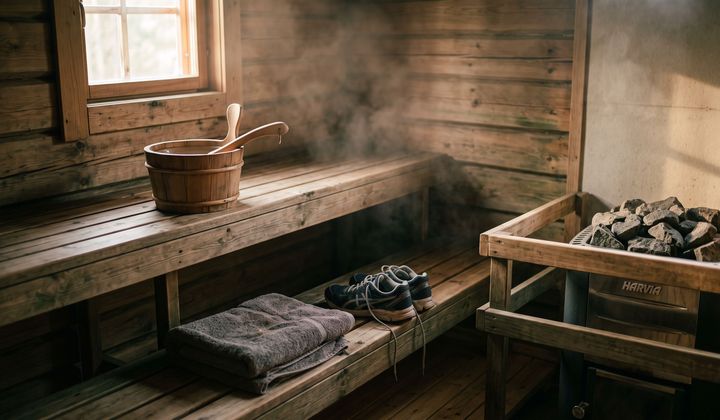
Bei Hitzeexposition ist die Datenlage für kardiovaskuläre Endpunkte am besten. Die untersuchten Protokolle bewegen sich meist bei 15 bis 20 Minuten, vier- bis siebenmal pro Woche – deutlich mehr, als die meisten Menschen praktizieren.
Weiterlesen mit Premium
Der Rest dieses Beitrags gehört zum Premium-Paket für 29,00 € im Monat. Darin enthalten sind 76 weitere Beiträge, alle Programme und Webinare zum Mitgliederpreis.
Jederzeit kündbar. Die Kernaussagen unten bleiben frei lesbar.
Kernaussagen — auch ohne Abo
- Untersuchte Sauna-Protokolle: 15–20 Minuten, 4–7 Mal pro Woche.
- Kälte: kurzfristige Effekte belegt, Langzeitendpunkte offen.
- Kälte direkt nach Krafttraining dämpft die Hypertrophieantwort.
 Vertiefen Was bringen 15 Minuten Sauna nach dem Training laut einer randomisierten Studie?
  Nächster Schritt Wie kann ich meinen Blutdruck ohne Medikamente senken? Querverbindung Was senkt den Blutdruck nachweislich ohne Medikamente?
 Ähnliche Beiträge




Belege (5)
Open-Access-Publikationen mit offener Lizenz, direkt verlinkt.
Effects of regular sauna bathing in conjunction with exercise on cardiovascular function: a multi-arm, randomized controlled trial
Abstract
Regular exercise and sauna bathing have each been shown to improve cardiovascular function in clinical populations. However, experimental data on the cardiovascular adaptations to regular exercise in conjunction with sauna bathing in the general population are lacking. Therefore, we compared the effects of exercise and sauna bathing to regular exercise using a multi-arm randomized controlled trial. Participants (<i>n</i> = 47) aged 49 ± 9 with low physical activity levels and at least one traditional cardiovascular disease (CVD) risk factor were randomly assigned (1:1:1) to guideline-based regular exercise and 15-min postexercise sauna (EXS), guideline-based regular exercise (EXE), or control (CON) for 8 wk. The primary outcomes were blood pressure (BP) and cardiorespiratory fitness (CRF)<sub>.</sub> Secondary outcomes included fat mass, total cholesterol levels, and arterial stiffness. EXE had a greater change in CRF (+6.2 mL/kg/min; 95% CI, +4.2 to +8.3 mL/kg/min) and fat mass but no differences in BP when compared with CON. EXS displayed greater change in CRF (+2.7 mL/kg/min; 95% CI, +0.2 to +5.3 mL/kg/min), lower systolic BP (-8.0 mmHg; 95% CI, -14.6 to -1.4 mmHg), and lower total cholesterol levels compared with EXE. Regular exercise improved CRF and body composition in sedentary adults with CVD risk factors. However, when combined with exercise, sauna bathing demonstrated a substantially supplementary effect on CRF, systolic BP, and total cholesterol levels. Sauna bathi
Acute effects of leg heat therapy on walking performance and cardiovascular and inflammatory responses to exercise in patients with peripheral artery disease
Abstract
Lower-extremity peripheral artery disease (PAD) is associated with increased risk of cardiovascular events and impaired exercise tolerance. We have previously reported that leg heat therapy (HT) applied using liquid-circulating trousers perfused with warm water increases leg blood flow and reduces blood pressure (BP) and the circulating levels of endothelin-1 (ET-1) in patients with symptomatic PAD. In this sham-controlled, randomized, crossover study, sixteen patients with symptomatic PAD (age 65 ± 5.7 years and ankle-brachial index: 0.69 ± 0.1) underwent a single 90-min session of HT or a sham treatment prior to a symptom-limited, graded cardiopulmonary exercise test on the treadmill. The primary outcome was the peak walking time (PWT) during the exercise test. Secondary outcomes included the claudication onset time (COT), resting and exercise BP, calf muscle oxygenation, pulmonary oxygen uptake (V̇O<sub>2</sub> ), and plasma levels of ET-1, interleukin-6 (IL-6) and tumor necrosis factor-alpha (TNF-α). Systolic, but not diastolic BP, was significantly lower (~7 mmHg, p < .05) during HT when compared to the sham treatment. There was also a trend for lower SBP throughout the exercise and the recovery period following HT (p = .057). While COT did not differ between treatments (p = .77), PWT tended to increase following HT (CON: 911 ± 69 s, HT: 954 ± 77 s, p = .059). Post-exercise plasma levels of ET-1 were also lower in the HT session (CON: 2.0 ± 0.1, HT: 1.7 ± 0.1, p = .02).
Acute and adaptive cardiovascular and metabolic effects of passive heat therapy or high-intensity interval training in patients with severe lower-limb osteoarthritis
Abstract
Exercise is painful and difficult to perform for patients with severe lower-limb osteoarthritis; consequently, reduced physical activity contributes to increased cardiometabolic disease risk. The aim of this study was to characterize the acute and adaptive cardiovascular and metabolic effects of two low or no impact therapies in patients with severe lower-limb osteoarthritis: passive heat therapy (Heat) and high-intensity interval training (HIIT) utilizing primarily the unaffected limbs, compared to a control intervention of home-based exercise (Home). Participants completed up to 12 weeks of either Heat (20-30 min immersed in 40°C water followed by ~15-min light resistance exercise), HIIT (6-8 × 60-s intervals on a cross-trainer or arm ergometer at ~90-100% peak V̇$$ \dot{V} $$ O<sub>2</sub> ) or Home (~15-min light resistance exercise); all 3 sessions/week. Reductions in systolic (12 & 10 mm Hg), diastolic (7 & 4 mm Hg), and mean arterial (8 & 6 mm Hg) blood pressure (BP) were observed following one bout of Heat or HIIT exposure, lasting for the duration of the 20-min monitoring period. Across the interventions (i.e., 12 weeks), resting systolic BP and diastolic BP decreased with Heat (-9 & -4 mm Hg; p < 0.001) and HIIT (-7 & -3 mm Hg; p ≤ 0.011), but not Home (0 & 0 mm Hg; p ≥ 0.785). The systolic and diastolic BP responses to an acute exposure of Heat or HIIT in the first intervention session were moderately correlated with adaptive responses across the intervention (r ≥
Does sauna bathing protect against dementia?
Abstract
Repeated heat exposure like sauna bathing is suggested to beneficially affect against dementia development. The epidemiological evidence is, however, scarce. Therefore, we studied the association between heat exposure during sauna bathing (i.e., the frequency of sauna bathing, frequency of heat sessions, length of stay in heat, sauna temperature) and the subsequent risk of dementia. A prospective cohort study was conducted based on 13,994 men and women aged 30-69 and free from dementia diagnosis from the Finnish Mobile Clinic Follow-up Survey. During a follow-up of 39 years, a total of 1805 dementia patients were diagnosed. The sauna bathing data was gathered from a questionnaire. Analyses based on the Cox model included the sauna bathing variables and the potential confounding factors. Sauna bathing frequency was related to a reduced risk of dementia after adjustment for the potential sociodemographic, lifestyle, and metabolic risk factors of dementia considered. The hazard ratio of dementia between individuals sauna bathing 9-12 times per month in comparison with those not sauna bathing or sauna bathing less than four times per month was 0.47 (95% CI = 0.25-0.88) during the first 20 years of follow-up and 0.81 (95% CI = 0.69-0.97) during the whole follow-up. The results are in line with the hypothesis that sauna bathing provides protection against dementia. Further studies are required to verify the suggested benefits of sauna bathing.
The cardio-respiratory effects of passive heating and the human thermoneutral zone
Abstract
The thermoneutral zone (TNZ) defines the range of ambient temperatures at which resting metabolic rate (MR) is at a minimum. While the TNZ lower limit has been characterized, it is still unclear whether there is an upper limit, that is, beyond which MR during rest increases, and if so, what physiological upregulations explain this. We take the first step to fill this knowledge gap by measuring MR and multiple physiological variables in participants exposed to ambient heat stress while resting. Thirteen participants were exposed for an hour to 28℃-50% relative humidity (RH) air, and both 40 and 50℃ each in 25% RH and humid (50% RH) conditions. Core and skin temperatures, blood pressure, sweat-, heart-, and breathing-rate, minute ventilation, and movement levels were recorded throughout each condition. MR increased 35% (p = .015) during exposure to 40℃-25% RH compared to baseline and a further 13% (p = .000) at in 50℃-50%RH. This was not explained by increased fidgeting (p = .26), suggesting physiological upregulation. However, while greater heat stress invoked increases in heart rate (64%, p = .000), minute ventilation (78%, p = .000), and sweat rate (74%. p = .000) when comparing 50℃-50% RH with baseline, the exact size of their relative energy cost is unclear and, therefore, so is their contribution to this increase in MR. Our study shows clear evidence that resting MR increases in humans at high temperature-there is a metabolic upper critical temperature, at least as low as
Quellen aus Europe PMC, ausschließlich CC0, CC BY oder CC BY-SA. Der redaktionelle Text ist eine eigene Formulierung, keine Übernahme aus den Originalarbeiten.
Medizinische Prüfung: Dr. med. Anna Reuter, Fachärztin für Innere Medizin, 05. April 2026.
Fehler gefunden oder eine Frage zum Beitrag? Wir prüfen jeden Hinweis gegen die Quellen.
Hinweis an den Leserservice